
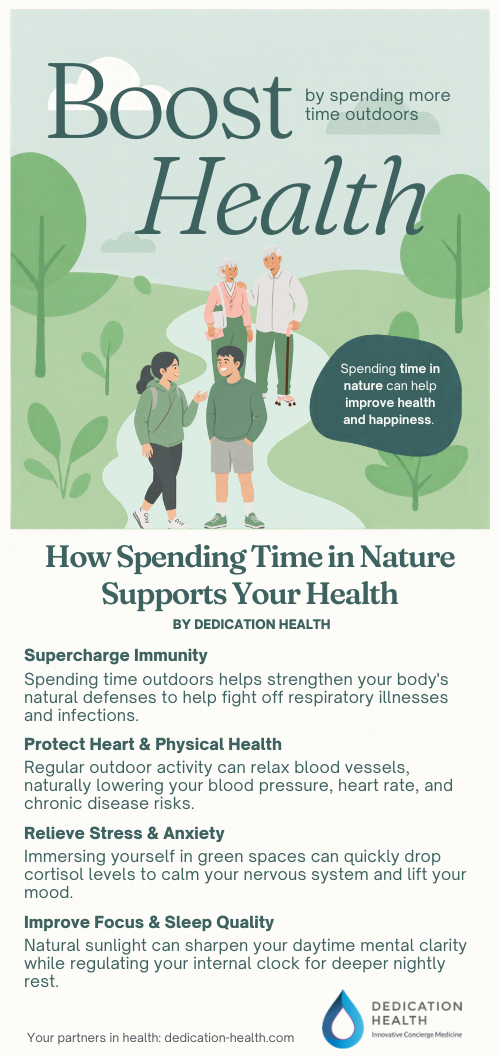
Between work, family responsibilities, appointments, and everyday routines, it’s easy to spend most of the day indoors without giving it much thought. Yet something as simple as stepping outside and enjoying a little fresh air and greenery can have meaningful benefits for your physical and mental well-being.
Research continues to show connections between spending time in nature and better health, including improvements in stress levels, cardiovascular health, concentration, and sleep. While getting outside isn’t a replacement for medical care, it can be a valuable part of a healthy lifestyle. At Dedication Health, we believe that taking care of yourself includes the small, everyday habits that help you feel your best.
Support Your Immune System
Your immune system works around the clock to protect your body, and emerging research suggests that spending time in natural environments may help support some aspects of immune function. Studies involving forest exposure, sometimes called forest bathing, have found changes in the activity of natural killer (NK) cells. These specialized immune cells play an important role in identifying and responding to virus-infected and abnormal cells.
Although these findings are promising, researchers are still working to understand how nature exposure affects immune health over time. Spending time outdoors has not been proven to prevent respiratory infections or other illnesses, but it may offer benefits that complement established immune-supporting habits. Whether you’re enjoying a wooded trail or relaxing in a nearby park, making time for nature can be one more way to support your overall well-being.
Protect Your Heart & Physical Health
Spending more time outdoors can be especially beneficial for your cardiovascular health. Natural environments often encourage movement, whether you’re walking through the neighborhood, exploring a park, or tending to your garden. Regular physical activity helps maintain healthy blood pressure, improves cardiovascular fitness, and reduces the risk of developing certain chronic conditions, including heart disease and type 2 diabetes.
There may also be benefits associated with the natural surroundings themselves. Research has linked greater exposure to green spaces with modestly lower blood pressure and improved cardiovascular outcomes, although these studies do not necessarily establish a direct cause-and-effect relationship. The combination of movement, relaxation, and time spent in nature makes outdoor activity a worthwhile addition to a heart-healthy lifestyle.
You don’t need to commit to long hikes or strenuous exercise to get started. A comfortable walk outside, adjusted to your fitness level and mobility, is a practical way to incorporate more movement into your day. What matters most is finding activities you enjoy and can maintain consistently.
Relieve Stress & Anxiety
Have you ever noticed how a little time outside can make a stressful day feel more manageable? There’s research behind that feeling. Studies suggest that spending time in natural settings can help reduce perceived stress and anxiety while promoting a calmer, more relaxed state of mind.
Nature exposure has also been associated with changes in the body’s physiological stress response, including reductions in certain stress markers such as cortisol. While the effects vary from person to person, spending time around trees, gardens, and other green spaces can provide a welcome opportunity to decompress. Even a short break outdoors may help you feel less overwhelmed and better prepared to handle the rest of your day.
You don’t have to travel far to enjoy these benefits. Sitting in a quiet garden, taking a walk through a neighborhood park, or simply stepping away from your usual surroundings can provide a refreshing change of pace. Making outdoor time a regular part of your routine may be particularly helpful during busy or stressful periods.
Improve Focus & Sleep Quality
If you’ve ever struggled to concentrate after spending hours working, reading, or looking at a screen, a little time outdoors may help. Research suggests that natural environments can support attention and cognitive performance, particularly after periods of mental fatigue. A walk through a green space or a quiet break outside may help restore your ability to focus when you return to your usual activities.
Spending time outdoors during daylight hours can also benefit your sleep. Natural sunlight helps regulate your body’s circadian rhythm, the internal clock that influences when you feel awake and when you feel sleepy. Exposure to daylight, particularly in the morning, helps reinforce a healthy sleep-wake cycle and may make it easier to maintain consistent sleep patterns.
If you’re looking for a simple place to start, consider taking your morning coffee outside or going for a short walk earlier in the day. These small adjustments can help you get more natural light while giving your mind a chance to recharge. Combined with regular sleep habits, daytime outdoor exposure can be a useful part of improving your overall sleep routine.
Make More Time for Nature, One Day at a Time
Spending time outdoors can be as simple as taking a walk around the neighborhood, enjoying an afternoon in the garden, or visiting a nearby park. Finding activities you genuinely enjoy makes it easier to incorporate more time in nature into your routine. Even a short break outside can be a refreshing way to relax, clear your mind, and enjoy a change of scenery.
At Dedication Health, we encourage our patients to make healthy everyday habits part of their approach to preventive care. Spending time in nature can support your physical and mental well-being in several ways, from managing stress and supporting heart health to improving focus and sleep. As you make plans for the week ahead, consider setting aside a little time to enjoy the outdoors. Small, consistent habits like these can become a valuable part of caring for your long-term health.